
REFRACTORY SOLUTIONS FOR CERAMICS MANUFACTURING
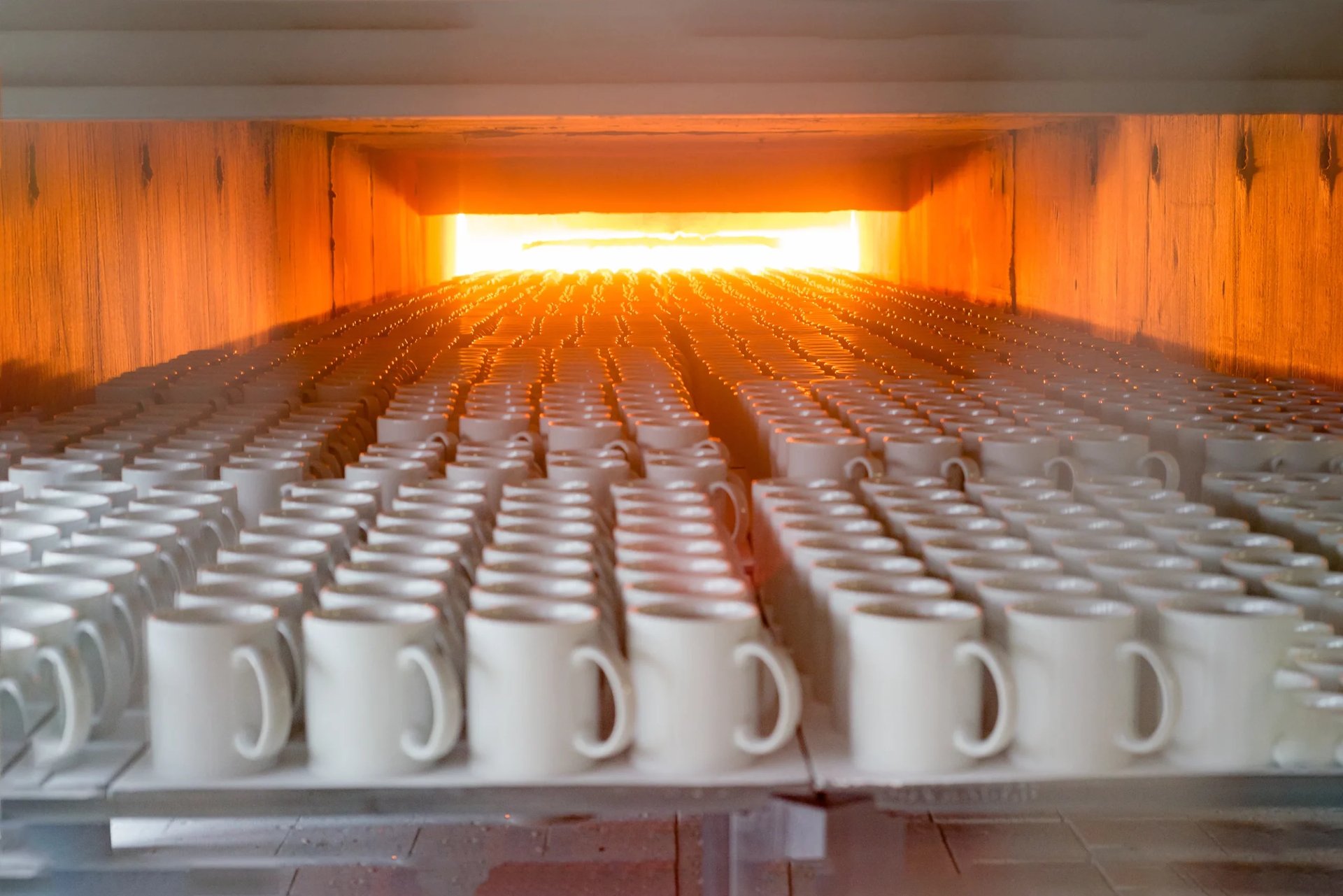
Ceramic manufacturing involves controlled high-temperature firing processes where temperature uniformity, atmosphere control, and dimensional stability are critical to product quality. Kilns often operate in continuous or repeated firing cycles, placing sustained thermal and mechanical demands on refractory linings.
Refractories play a key role in maintaining kiln integrity, ensuring uniform heat distribution, and supporting consistent ceramic properties across production cycles.
ROLE OF REFRACTORIES IN CERAMIC PLANTS
In ceramic manufacturing operations, refractories are essential for:
Withstanding repeated firing cycles and thermal shock
Maintaining temperature uniformity across kiln chambers
Resisting abrasion from ceramic ware and kiln furniture
Protecting kiln structures and supporting long service life
Ensuring stable firing conditions for product quality
Correct refractory selection directly impacts firing consistency, energy efficiency, kiln availability, and defect reduction.
KEY APPLICATION AREAS
Our refractory products are supplied for use across the following ceramic manufacturing units:
TUNNEL KILNS
Tunnel kilns operate continuously with varying temperature zones. Refractories must maintain thermal stability and resist wear over long operating campaigns.
SHUTTLE KILNS
Shuttle kilns experience repeated heating and cooling cycles. Refractories must withstand thermal shock and mechanical stress.
ROLLER HEARTH KILNS
These kilns require refractories that support precise temperature control and smooth movement of ceramic products through firing zones.
KILN FURNITURE & SUPPORTS
Refractories used in kiln furniture must provide dimensional stability and resist deformation at high temperatures.
FIRING CHAMBERS
Firing chambers demand refractories that ensure even heat distribution and resist chemical interaction with ceramic materials.
HEAT TREATMENT ZONES
These zones require refractories capable of maintaining consistent temperatures during controlled heating and cooling stages.
rEFRACTORY PRODUCTS COMMONLY USED
Depending on kiln design and firing requirements, ceramic plants typically use:
Shaped refractories for kiln linings, furniture, and structural components
Monolithic refractories such as castables and mortars for repairs and complex geometries
Insulating materials to reduce heat loss and improve firing efficiency
Material selection is guided by firing temperature, cycle frequency, kiln design, and ceramic product type.
OUR APPROACH TO THE CERAMICS SECTOR
We support ceramic manufacturers through:
Application-based refractory selection
Consistent quality and dimensional reliability
Export-ready supply for global ceramic facilities
Inspection support and logistics coordination
Our focus is on supplying refractories that support stable firing cycles and consistent ceramic quality.
SUPPORTING PRECISION CERAMIC PRODUCTION
Reliable refractories are essential to achieving uniform firing results and minimizing production defects.
We work closely with customers to align refractory materials with kiln design, firing profiles, and long-term operational goals.
Looking for refractory solutions for ceramic manufacturing operations?
Contact our team to discuss your application requirements or explore our refractory product range.
+91 91060 31803
contact@legionexim.com


© 2026 Legion Exim LLP